Cutting down on CON case confusion
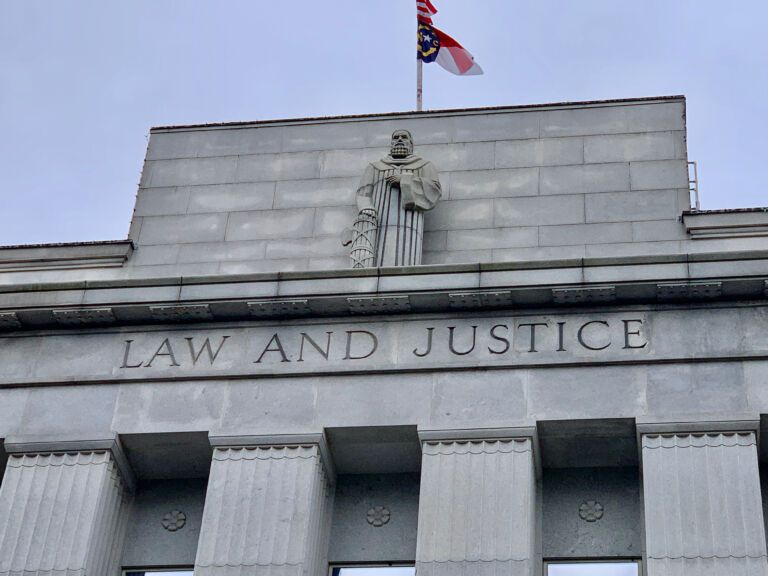
Healthcare in North Carolina would benefit from the end of the state’s certificate-of-need regime. But as long as CON endures, courts can limit confusion for those forced to deal with it.
The state Supreme Court could take up a case to offer helpful clarification for recurring CON conflicts.
The certificate of need acts as a government permission slip. Healthcare providers cannot add hospital beds, open new facilities, or buy high-dollar medical equipment in North Carolina without a CON.
The process artificially restricts healthcare supply. Results include higher costs and less convenience for consumers.
The federal government once required state CON programs. Since the Reagan administration dropped that mandate, 15 states have jettisoned CON. Yet North Carolina maintains one of the strictest CON laws.
The state Senate voted this year to scrap CON. Part of the Senate budget, the idea stalled during negotiations with the House. It’s unclear whether lawmakers will dump CON any time soon.
Meanwhile, North Carolina courts regularly deal with CON-related disputes. In some cases, providers file complaints to hurt competitors who secure a CON. When multiple providers compete for one available CON, the loser often goes to court.
That’s what happened in a dispute over 67 new hospital beds for Buncombe, Graham, Madison, and Yancey counties in western North Carolina.
State regulators awarded a CON to AdventHealth for a new hospital with all the government-approved beds. Advent’s CON blocked Mission Health from adding beds to its existing Asheville hospital.
Mission cried foul. The North Carolina Department of Health and Human Services committed “agency error” that led to “substantial prejudice” against Mission, according to its complaint.
An administrative law judge upheld DHHS’ decision. A unanimous state Appeals Court panel affirmed that ruling on June 18.
Now Mission asks North Carolina’s highest court to take the case. Its state Supreme Court petition cites “two fundamental questions of administrative law.”
First, Supreme Court justices could define “substantial prejudice” in a CON dispute. A successful challenge requires evidence of that type of prejudice.
“The Court of Appeals has addressed this substantial-prejudice requirement many times, but it has consistently refused to decide what is required under the standard,” Mission’s petition explained. “The partial answers that the Court of Appeals has given are contradictory and confusing.”
Substantial prejudice “is clearly causing a lot of confusion in the lower courts,” Supreme Court Justice Richard Dietz noted in a September 2024 oral argument. Mission highlighted Dietz’s comment in its petition.
“The current state of the law is so incomprehensible that the Administrative Law Judge assigned to this case included a plea for clarification in his final decision. But the Court of Appeals ignored that plea,” Mission’s lawyers argued.
“By deciding cases on a murky substantial-prejudice requirement, agencies can avoid judicial scrutiny of their errors,” Mission added. “That is harmful to the regulated public and the jurisprudence of this state. Because the Court of Appeals refuses to answer the question, the only remedy is discretionary review by this [Supreme] Court.”
The second major question involves a topic “flagged” by three of Dietz’s colleagues. Justice Tamara Barringer, joined by Chief Justice Paul Newby and Justice Phil Berger Jr., raised the issue while dissenting in the 2022 Virginia Electric case.
“Agencies have some discretion to change their policies over time,” Mission’s lawyers wrote. “But when they do so, must they acknowledge the change and give a good reason for it? In Virginia Electric, the majority implied that reason-giving was necessary, but it gave no framework for resolving the issue, to the disappointment of the dissenting justices.”
A recent unanimous US Supreme Court decision tackled this issue at the federal level. “This case is an appropriate vehicle for addressing that question in North Carolina,” Mission argued.
Mission accuses state regulators of dropping a requirement, “existing as long as anyone could remember,” that any new hospital awarded a CON must have a licensed general operating room. The AdventHealth proposal did not meet that requirement, Mission argued.
“The Department of Health and Human Services changed one of its longstanding policies to the detriment of Mission,” the petition explained. “Medical providers like Mission had relied on this policy. But the Department gave no contemporaneous explanation for the change.”
Supreme Court justices could decide whether the agency violated the law “when it failed to explain its change in position, and then decide whether this error substantially prejudiced Mission.”
Better yet, North Carolina lawmakers could moot the case by scrapping CON. Advent, Mission, and other providers could supply valuable health services without going to the government or to court for permission.
Mitch Kokai is senior political analyst for the John Locke Foundation.
link